
Whoa! That’s the gut reaction most of us have when we first hear about a wallet getting drained overnight. Seriously? You wake up and your tokens are gone. My instinct said: this can’t be just bad luck. Initially I thought user error was the whole story, but then I kept seeing the same patterns — clipboard hijacks, malicious dapps, social-engineered approvals — and realized the surface area is bigger than people admit. I’m biased, but extension wallets demand a different kind of attention than hardware or mobile wallets; they sit right in your browser, living alongside ads, trackers, and phishing overlays, and that makes them uniquely vulnerable.
Short version: treat your extension like sensitive plumbing. Medium version: audit your browser habits and permissions. Long version: if you mix casual browsing, DeFi trading, and NFT hunting in the same Chrome profile without compartmentalization, you’re creating an attacker’s playground where a single malicious script can escalate from reading page context to prompting unsafe transactions that a rushed user will sign — and that ripple effect can drain multiple protocols across chains if approvals are broad and unlimited.
Here’s what bugs me about the usual advice — it’s too abstract. People say “be careful” and “use hardware wallets.” Okay, fine. But that’s not actionable for the casual DeFi user who wants the convenience and speed of a browser wallet. So let’s talk practical trade-offs, concrete steps, and a wallet that gets a lot of things right if you configure it carefully.
Why browser extension wallets get targeted
Short answer: proximity. Extensions run in the same environment as the sites you visit, so they’re exposed to web risks that cold-storage users never face. Longer answer: an extension’s permissions, sloppy dapp integrations, and the user interface prompt flow can be abused. For example, a malicious website can overlay a fake “sign” window that confuses users into approving a contract that grants token transfer rights. On one hand it’s a UI problem; on the other hand it’s an ecosystem problem — many tokens and contracts still require unlimited approvals because developers prioritized UX over security. On one hand that speeds trades; though actually it opens you up to mass drains when approvals are abused.
Hmm… it’s also true that browsers vary. Chrome, Brave, and Edge handle extension isolation differently than Firefox and others, and that can affect attack vectors. I won’t pretend to know every nuance, but I’ve seen enough incident reports to say: assume your extension can be phished through the web page if you click around blindly.
Concrete hardening steps you can take today
1) Compartmentalize. Create separate browser profiles: one for general browsing, one for DeFi, and one for high-value assets. Short step, big payoff. 2) Lock down permissions. Only allow extension access to sites you explicitly trust. 3) Audit approvals. Revoke unlimited token allowances and reauthorize per-use or set low caps where possible. 4) Use a wallet that supports granular approvals and simulated transaction previews — that matters more than brand gloss. 5) When in doubt, pause. Seriously. If a dapp is asking for a long, complex transaction and you don’t understand every field, wait and verify.
I’ll be honest: revoking approvals is a PITA. But it’s also the most effective mitigation against cross-dapp drains, because many attacks reuse an old unlimited approval to move your entire balance. Check explorers and allowance-checking tools, and reduce permissions to the minimum required for the trade or interaction.
Where Rabby fits — and why I recommend checking it out
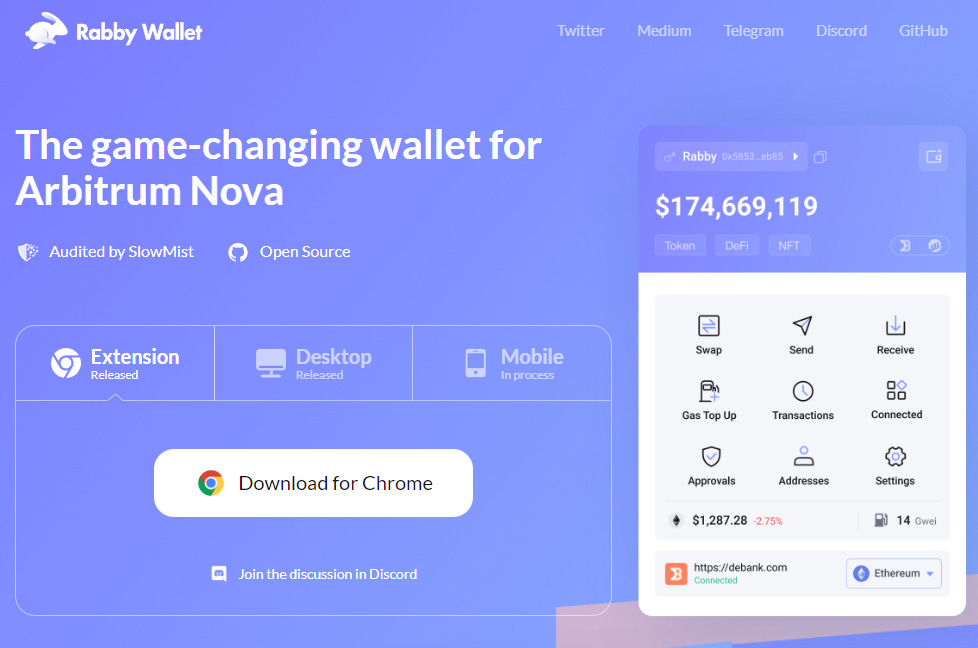
Okay, so check this out — Rabby wallet has a lot of features designed exactly for these issues: deep permission controls, transaction simulation, and a UX that separates signing intent from raw data. Something felt off about wallets that simply show a tiny “Approve” button with no context; Rabby tries to surface what will actually happen and highlight risky approvals before you sign. I’m not saying it fixes everything. Actually, wait — let me rephrase that: no extension is perfect, but Rabby raises the bar in ways that are useful for everyday traders and power users alike.
If you want to try it, consider this entry point: rabby wallet download. Install in a fresh profile, poke around the settings, and test with small amounts first. (Oh, and by the way… keep your seed phrase offline — written on paper or stored in a secure manager.)
One practical tip many miss: enable transaction simulation and inspect the “to” address and gas parameters carefully. Attackers sometimes craft transactions that do technically valid things but with side effects you wouldn’t expect — like setting an approval or calling a self-destruct function on a wrapper contract. If your wallet shows decoded calldata and warns about unusual approvals, that’s a signal that the product team is thinking about real-world threats.
Behavioral habits that actually help
Make signing deliberate. Slow down and make it a ritual: check origin, check amount, check allowance. Seriously, slow your roll. Use small test transactions with new dapps. Rotate keys for different risk profiles. Keep a minimal daily-use balance and store the bulk of assets in a hardware wallet or cold storage. And don’t reuse the same seed phrase across multiple extension wallets — that’s very very important.
On one hand, convenience is the killer feature of browser wallets; on the other hand, convenience is often what gets people burned. You can balance those by setting mental rules: never sign a transaction prompted by a popup you didn’t intentionally open; never enter your seed phrase into a web page (obvious, but it happens); and assume every new site could be malicious until proven otherwise.
Common questions (quick answers)
Can a browser extension be made as safe as a hardware wallet?
Nope. Hardware wallets isolate private keys in a secure element, so they reduce attack surface. Extension wallets can approach the safety of hardware if used with strict habits and paired with hardware for high-value transactions, but they will always be comparatively riskier because they’re part of the browser environment.
Are transaction simulators trustworthy?
They help a lot, but they’re not foolproof. Simulators decode calldata and estimate effects using on-chain state; they can miss off-chain triggers or complex contract behaviors. Use them as an additional check, not the sole defense. Also, prefer simulators built into your wallet rather than random third-party tools that might leak data.
What’s the one habit that prevents most losses?
Making signing deliberate. If you train yourself to pause, verify, and test with tiny amounts, you prevent many automated and social-engineering drains. It’s low tech, but it works.